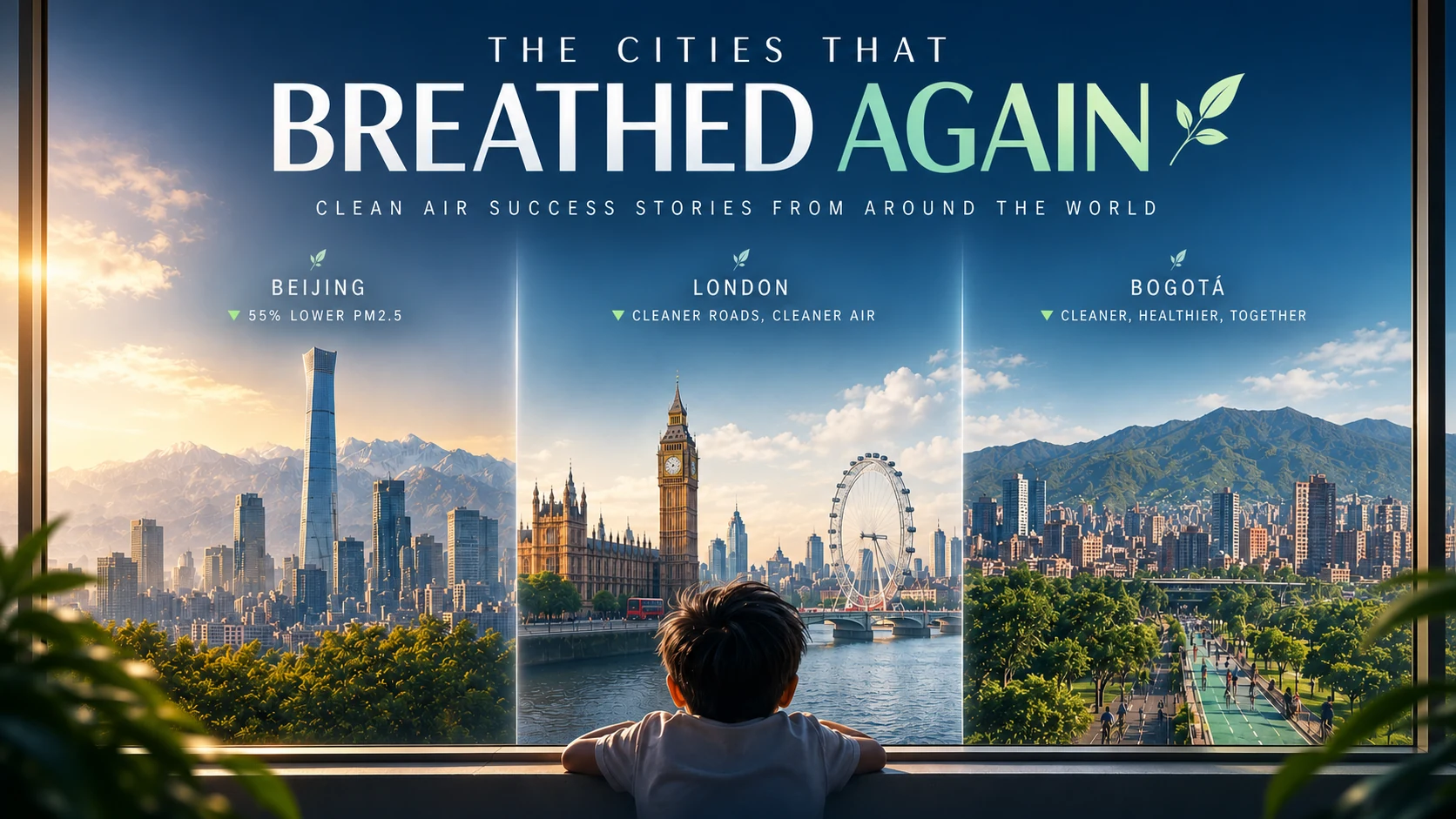
Ten years ago, you couldn't see the mountains from Beijing's city center. Today, on many days, you can. That's not a metaphor. It's measured, documented, and replicable. It's one of the most under-told environmental stories of our time.
We spend a lot of time talking about how bad the air is. Rightfully so! Roughly 7 million people die from air pollution-related causes every year, and hundreds of millions more live with chronic respiratory compromise. The data is grim, and ignoring it helps no one.
But here's what doesn't get enough space: the data is also full of hope.
Several cities across the world have made measurable, significant progress on air quality over the past two decades. Not through magic. Not through economic collapse. Through policy, technology, investment, and repeatedly stubborn political will. These are their stories.
Beijing: The Long Game
In 2013, Beijing recorded average PM2.5 concentrations above 85 micrograms per cubic meter which is roughly 8x the WHO's recommended annual guideline. Images of residents wearing respirators while commuting went viral worldwide. The government, facing enormous public pressure, launched one of the most ambitious clean air action plans in history.
What followed was a decade of unglamorous, grinding reform: coal plants within the city limits were shut down or converted to natural gas, heavy-polluting vehicles were phased out through a tiered license plate system, hundreds of industrial facilities were relocated or closed, and a nationwide real-time air monitoring network was built from scratch.
By the early 2020s, Beijing's average annual PM2.5 had dropped by nearly 55%. The mountains reappeared. The city still has bad days. Air quality doesn't transform overnight, but the trend line is unmistakably downward. More importantly, it proved that even a megacity of 20+ million people can course-correct.
The lesson isn't that Beijing's model should be copied wholesale. It's that sustained political commitment, matched by measurement and transparency, moves the needle.
London: From Pea-Soup to Breathable
London's Great Smog of 1952 killed an estimated 4,000 people in four days. The event was so catastrophic that it directly led to the UK's Clean Air Act of 1956 - one of the world's first major pieces of air pollution legislation.
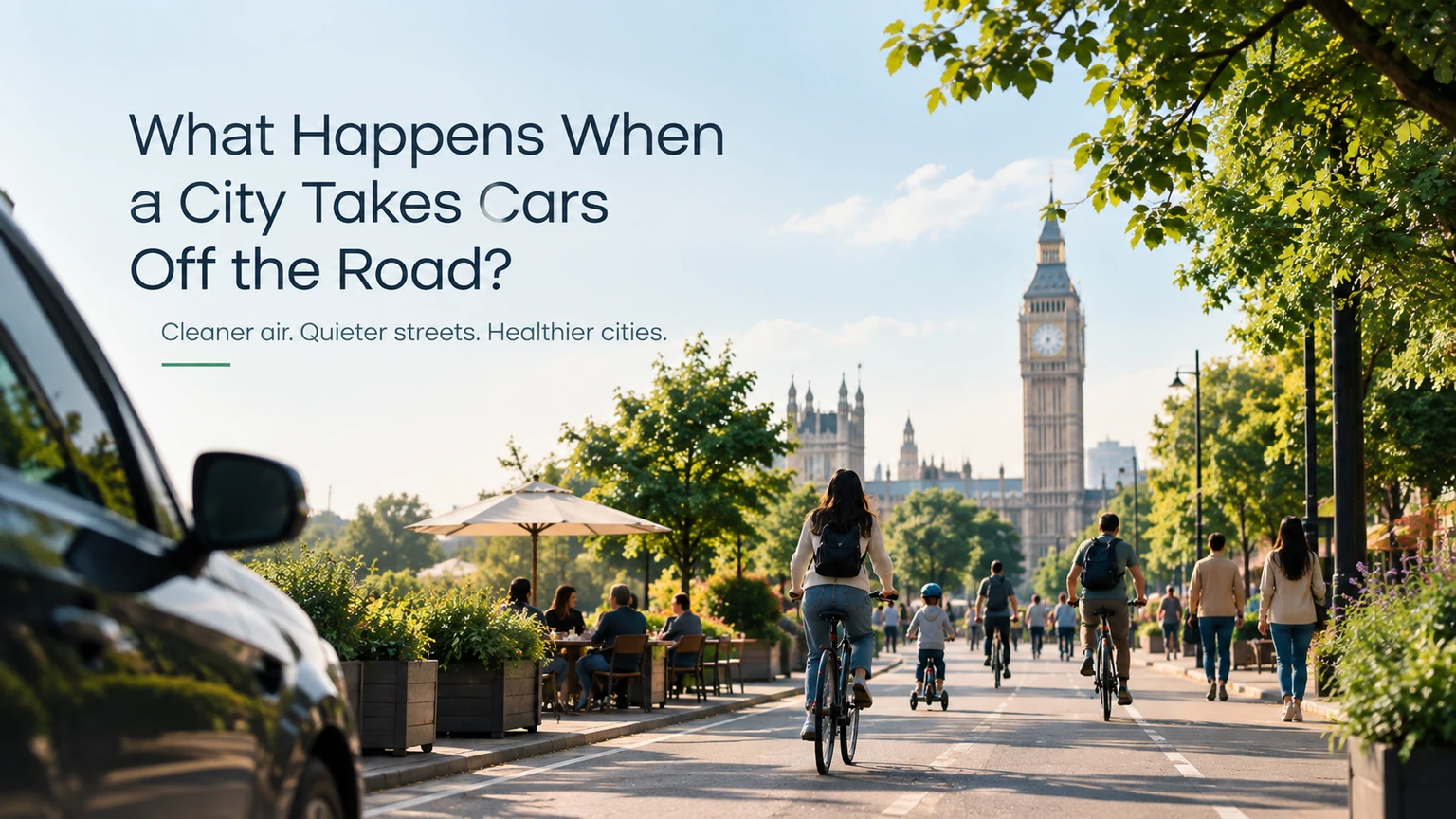
Seventy years later, London is still working on it, but the progress is real. The city's Ultra Low Emission Zone (ULEZ), which charges highly polluting vehicles for entering the central city, has dramatically reduced roadside nitrogen dioxide. Newer expansions of the zone have extended these benefits to outer boroughs.
London's story is a useful counter-narrative to the idea that economic activity and clean air are opposites. The ULEZ was controversial. Businesses protested. Some residents pushed back. But the measurements since its introduction show consistent improvements in NO₂ levels along major roads. Also, the city's long-term air quality trend has been one of steady improvement since peak industrial-era pollution.
Bogotá: The Unlikely Turnaround
South America's air quality doesn't often make global headlines, but Bogotá's transformation deserves recognition. Colombia's capital once struggled with severe vehicle emissions and industrial pollution. Over the past 15 years, the city has expanded its TransMilenio Bus Rapid Transit system, deployed electric buses, and invested heavily in cycling infrastructure - not just for commuters, but as a culture shift.
Bogotá now has one of the most extensive cycling networks in South America. On Sundays, major arterial roads are closed to motor vehicles and given over to cyclists and pedestrians in an event called Ciclovía; a tradition that has been running since 1974 and attracts millions of participants each year.
Air quality improvements in Bogotá are harder to isolate from broader urban changes, but the directional story is positive. More importantly, the city demonstrates that mobility reform is not just industrial control but is a legitimate lever for cleaner air.
Delhi NCR: Early Signs of Progress
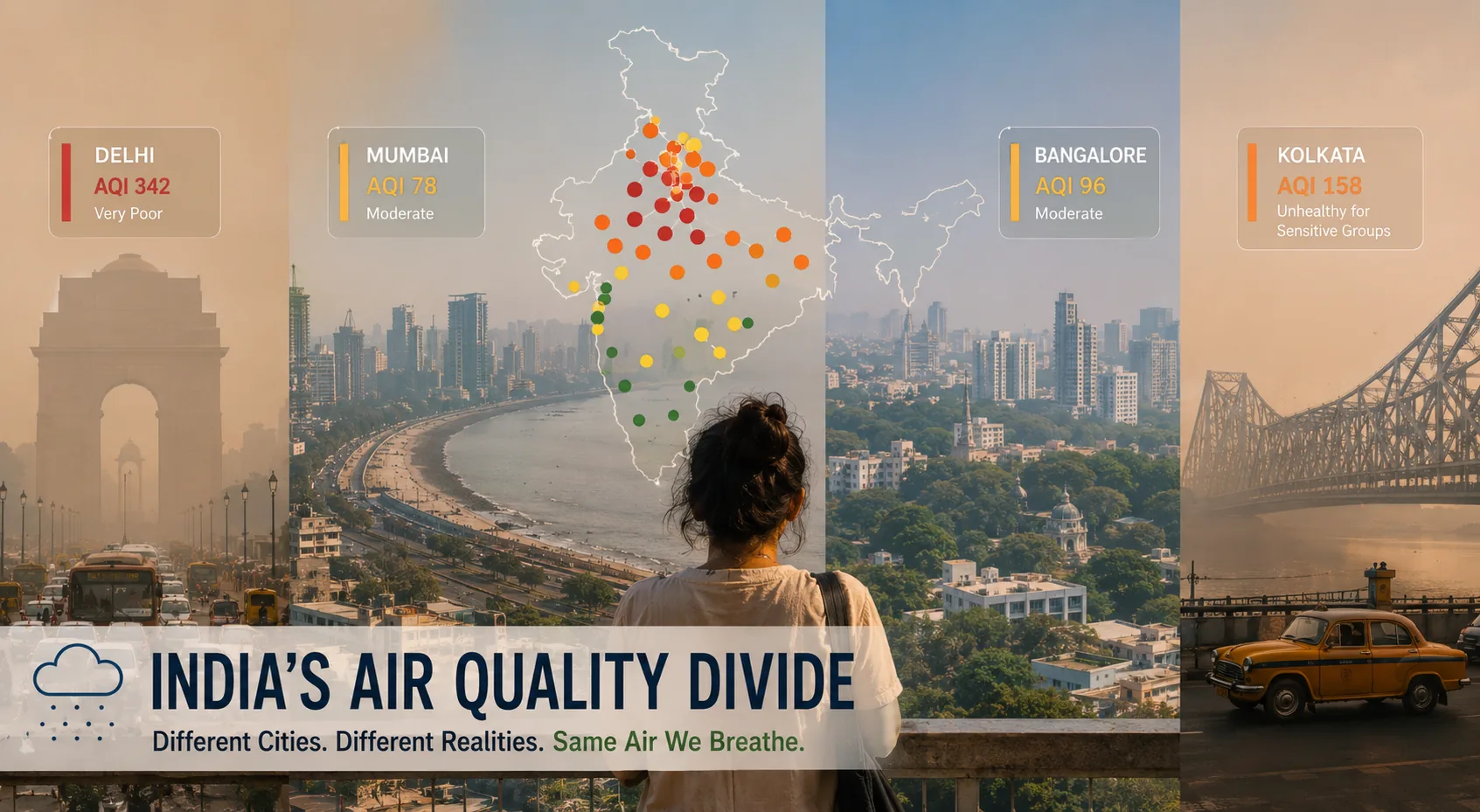
It would be dishonest to call Delhi's air quality a success story yet. But it would also be inaccurate to ignore what's changed. The phased retirement of older, high-polluting vehicles, the expansion of the Delhi Metro network to over 390 km, the introduction of BS-VI fuel emission standards across India, and real-time AQI monitoring infrastructure across the NCR have all moved conditions in the right direction.
On specific metrics like vehicle emissions, some industrial parameters - Delhi is better than it was a decade ago. The challenge is that population growth, crop burning cycles, construction activity, and seasonal meteorology continue to push back against these gains. Progress exists. It's just not yet winning.
What These Cities Have in Common
Every city that has meaningfully improved its air quality shares a few traits: they built measurement infrastructure first, so they could track what worked; they treated transport as a primary lever alongside industry; they didn't wait for perfect conditions before acting; and they communicated the data to residents.
That last point matters more than it sounds. When people can see their city's air quality in real-time and not as an abstract annual average, but as a live number tied to where they live and breathe, something shifts. They ask better questions. They demand better answers.
That's what real-time dashboards do. Not just inform. Activate.
See how your city compares right now. Open the live AQI dashboard and search any city in the world. The data might surprise you - in either direction.
Compare City Air Quality