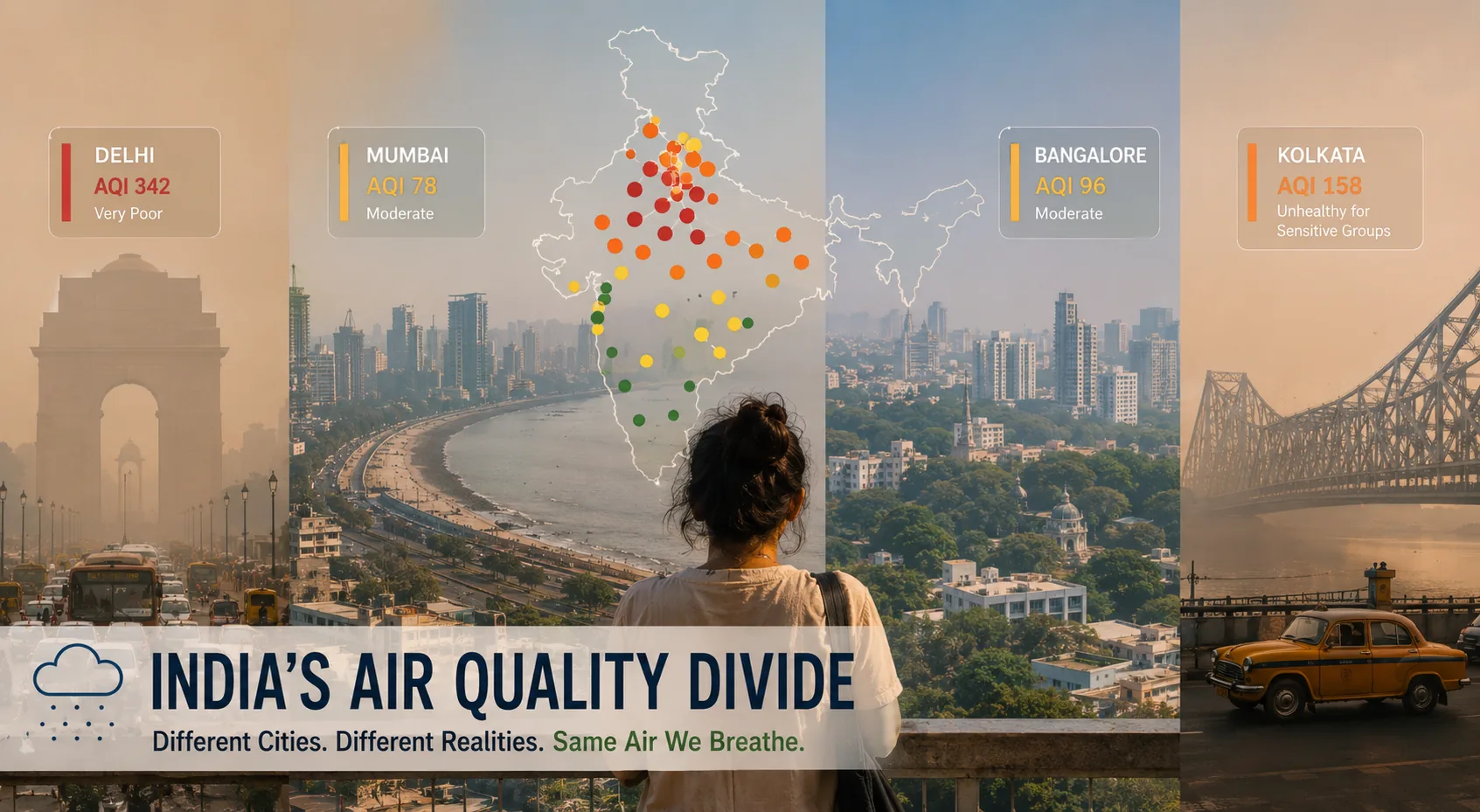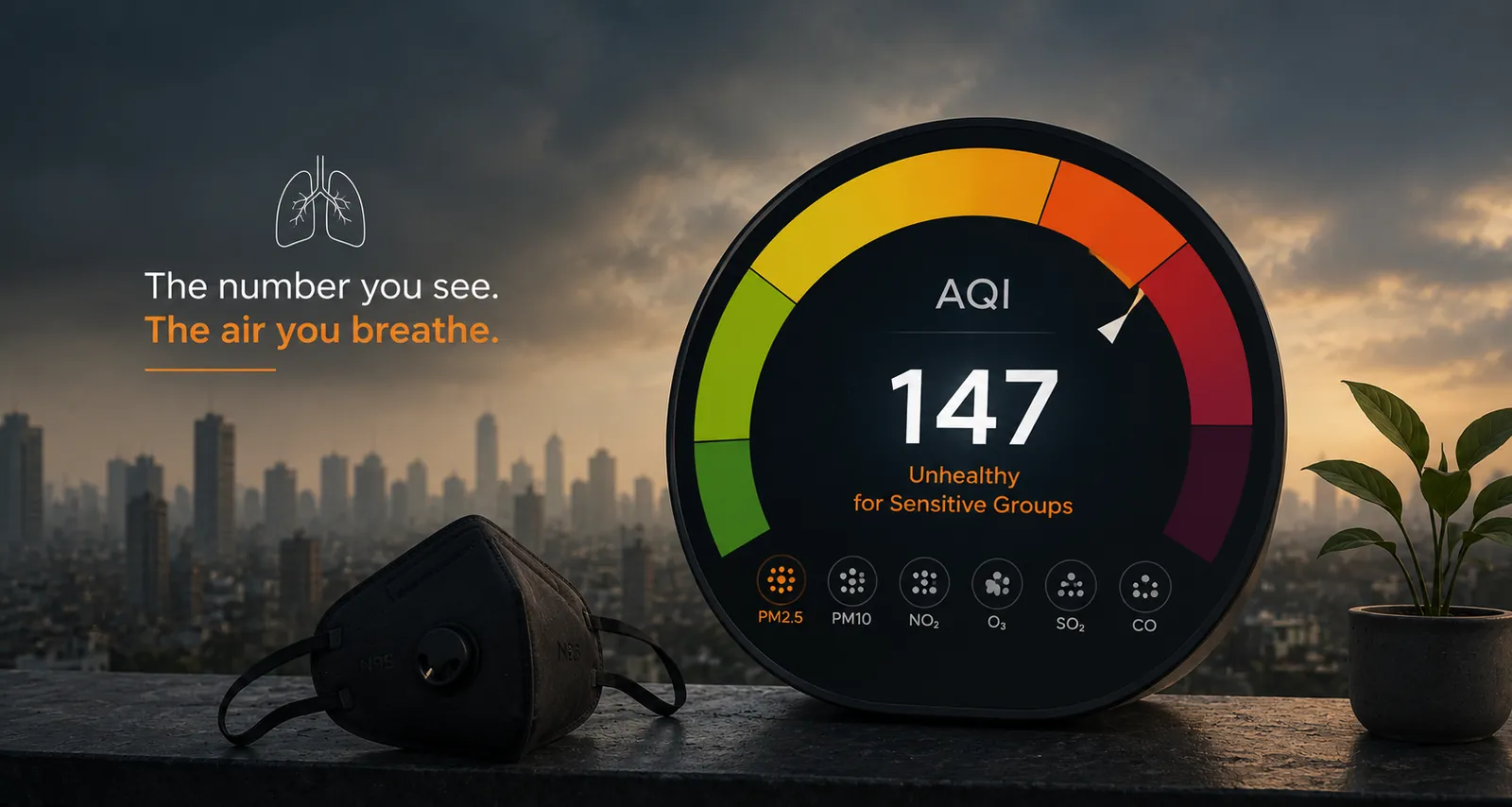
Every October, like a slow-motion alarm clock, Delhi's air begins its winter deterioration. The city hasn't changed overnight. The factories haven't multiplied. The cars haven't doubled. But the AQI starts climbing – 100, 150, 200 – and by November, on the worst days, the numbers scroll past 400 while the sky turns the colour of weak tea. What's happening? The honest answer is more complicated than the stubble burning debate suggests.
Delhi's winter air crisis has been described, debated, and litigated so many times that a kind of collective numbness has set in. But understanding the actual mechanics – why winter specifically, why the dramatic spikes, why some years are worse than others – is essential for anyone who wants to make intelligent decisions about how they live in the city during these months.
The Meteorological Trap
The fundamental driver of Delhi's winter pollution is not a source. It's a container.
The Indo-Gangetic Plain, on which Delhi sits, is one of the worst-ventilated geographical basins on Earth from an air quality perspective. Bounded to the north and east by the Himalayas and Siwaliks, and relatively flat in all other directions, the IGP has weak lateral airflow for large parts of the year.
In winter, this structural disadvantage is compounded by temperature inversion. During the day, solar heating drives convection that helps disperse pollutants upward. At night, the ground cools rapidly, creating a layer of dense cold air near the surface. Above this sits warmer air – and this inversion layer acts as a lid, trapping everything produced at ground level.
Dawn and early morning hours – when Delhi residents often venture out for walks and exercise – are frequently the most polluted parts of the day. The night's accumulated emissions have been trapped under an inversion that hasn't yet broken.
Stubble Burning: Real, Significant, But Not the Whole Story
October to November marks the paddy harvest period in Punjab and Haryana. Farmers burning crop residue – a practice that is economically rational given time pressure and the cost of alternatives – generates massive plumes of smoke that satellite imagery tracks moving directly into the NCR.
This is a real and substantial contributor, particularly during peak burning weeks. Studies have attributed anywhere from 20% to 45% of Delhi's peak pollution load during these weeks to stubble burning, depending on the year and the weather.
But here's what the stubble burning debate obscures: on the worst days, when AQI exceeds 400, stubble burning is typically amplifying a baseline that is already at 200+ from local sources. Remove the stubble burning entirely and Delhi still has a severe winter air quality problem. It just becomes a very severe one instead of a catastrophic one.
The local sources – vehicular emissions (over 11 million registered vehicles), construction dust, industrial activity in the NCR periphery (Faridabad, Ghaziabad, Greater Noida), and biomass burning for heating – collectively form a year-round pollution burden that winter meteorology concentrates.
Diwali: The Annual Spike Within a Crisis
Diwali falls squarely within Delhi's already-compromised winter season. The fireworks emissions, while intense and dramatic, are relatively brief in duration. What makes Diwali's air quality impact severe is the timing: the fireworks load lands on top of an atmosphere already carrying maximum winter baseline pollution, often during an inversion event, with limited dispersion capacity.
The result is typically Delhi's worst individual AQI readings of the year – sometimes exceeding 500 (the top of the standard scale) in the 48 hours around the festival. The spike typically lasts two to four days before reverting to the elevated winter baseline.
Why Some Winters Are Worse Than Others
If you've lived in Delhi for several years, you've noticed that not all winters are equally bad. Some November months are bearable; others are catastrophic. The primary variable is weather.
Wind speed and direction matter enormously. Westerly winds of even modest speed can clear the city significantly. Calm, still conditions during an inversion event concentrate everything. Rainfall – even light rain – washes particulates from the atmosphere and provides dramatic, if temporary, improvement.
This explains the apparent paradox of winters where stubble burning was extensive but Delhi's air was "not that bad" – because wind conditions carried the smoke elsewhere – and winters where stubble burning was lower than average but Delhi's readings were extreme, because meteorology provided no escape.
The dashboard's 7-day and 14-day trend view makes this pattern visible.
What Is Actually Being Done
Delhi has implemented a range of policies – the Odd-Even vehicle rationing scheme, the Graded Response Action Plan (GRAP) with escalating restrictions tied to AQI thresholds, bans on coal and biomass burning, stricter industrial emission norms, and the expansion of the Delhi Metro.
Progress on the vehicular side is real: the transition to BS-VI fuel in 2020 significantly reduced particulate and NOₓ emissions per vehicle. The Metro's ridership – pre- and post-pandemic – represents millions of vehicle trips avoided.
What hasn't been solved: the fundamental meteorological trap, the agricultural burning coordination problem (which involves political will across multiple state governments), and the sheer pace of urban growth.
Living Through It Intelligently
The goal isn't to leave Delhi every winter. It's to make smarter daily decisions during the worst months. Check the live AQI in the morning before deciding whether today is a walk day or a window-closed day. Know when the inversions typically break (mid-morning, usually). Have an N95 available for commuting on genuinely bad days.
The dashboard shows you what today is. That's a meaningful advantage over years past, when the only signal was whether you could see the buildings on the other side of the road.
Delhi's air changes by the hour. The dashboard shows real-time AQI for Delhi and every NCR district – so you always know what you're stepping out into.
Check Delhi's Air Right Now